
Rental income is one of the most popular ways to build long-term wealth and create an additional source of cash flow. The idea is straightforward: buy or own a property, rent it to tenants, and collect payments each month.
However, owning rental property is not as simple as collecting rent and watching money appear in your bank account.
A successful rental property requires research, planning, capital, legal awareness, financial discipline, and ongoing management. Expenses such as repairs, insurance, taxes, vacancies, maintenance, and mortgage payments can quickly affect your profits. A property that appears profitable at first glance may become expensive if you ignore the full cost of ownership.
For that reason, rental income should be treated as a business and an investment, not a shortcut to easy money.
When approached carefully, real estate can be a useful part of a diversified financial plan. It may provide monthly income, possible property appreciation, tax considerations, and a tangible asset. But it also carries risk, including the potential for financial loss.
https://trendminers.online/passive-income-ideas-that-work/
This beginner’s guide explains how rental income works, how to evaluate a property, what costs to expect, how to calculate cash flow, and how to decide whether property investment is right for you.
What Is Rental Income?
Rental income is money received from tenants in exchange for the use of a property.
The property may be:
- A single-family home
- An apartment or condominium
- A duplex, triplex, or multifamily property
- A spare room in your primary residence
- A vacation rental
- A commercial property
- A parking space
- A garage
- A storage unit
- A piece of land, depending on local laws and demand
The most common example is a landlord buying a house or apartment and renting it to a tenant on a monthly lease.
The tenant pays rent, while the property owner uses that income to cover expenses. If money remains after all costs are paid, that amount is the property’s cash flow.
Rental income can be active, semi-passive, or relatively passive depending on how the property is managed.
If you handle tenant communication, repairs, leasing, bookkeeping, and maintenance yourself, it can take significant time. If you hire a property manager, your involvement may be lower, but management fees reduce your income.
This is why real estate is often called a semi-passive income stream rather than completely passive income.
For more ideas beyond property ownership, see 15 Passive Income Ideas That Actually Work for Beginners.
How Rental Income Works
At its core, rental income depends on the difference between money coming in and money going out.
The money coming in is usually monthly rent. The money going out includes mortgage payments, insurance, property taxes, maintenance, repairs, utilities, vacancy costs, management fees, and other expenses.
Here is a simple example.
Imagine a property rents for $2,000 per month.
Monthly costs might include:
- Mortgage payment: $1,050
- Property taxes: $250
- Insurance: $100
- Property management: $160
- Maintenance reserve: $150
- Vacancy reserve: $100
- Miscellaneous expenses: $90
Total monthly expenses: $1,900
Estimated monthly cash flow: $100
This property may technically have positive cash flow, but the margin is small. One major repair, missed rent payment, or period without a tenant could erase several months of profit.
That is why investors should not only ask, “How much rent can this property earn?”
A better question is:
“How much money is likely to remain after all realistic expenses, reserves, and risks are included?”
Rental income should be evaluated using conservative estimates. If a deal only works under perfect conditions, it may not be a strong investment.
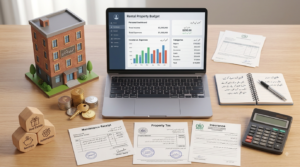
The Main Ways Rental Property Investors Make Money
Rental property investors may earn money in several ways. Understanding all of them can help you make better decisions.
Monthly Cash Flow
Cash flow is the money left after rental income covers operating costs, debt payments, and reserves.
Positive cash flow means the property generates more income than expenses.
Negative cash flow means costs exceed income. Some investors accept negative cash flow if they expect property values to rise, but this can be risky. You need enough income and savings to cover the shortfall.
For beginners, positive and stable cash flow is generally easier to manage than relying only on hoped-for appreciation.
Property Appreciation
Appreciation means the property increases in value over time.
For example, if you buy a property for $250,000 and later sell it for $300,000, the property has appreciated by $50,000 before accounting for transaction costs, taxes, repairs, and other expenses.
Appreciation is never guaranteed. Property values can decline because of local economic changes, high interest rates, oversupply, neighborhood issues, natural disasters, or broader market conditions.
Do not buy a rental property solely because you expect its value to rise. The investment should still make financial sense based on current income and expenses.
Mortgage Principal Paydown
If you finance a rental property with a mortgage, part of each payment may go toward reducing the loan balance.
Over time, tenants may indirectly help pay down the mortgage through rent payments. As the loan balance decreases, your equity in the property can increase.
This can build wealth gradually, but it does not always create immediate cash flow. You still need to cover all monthly costs and be prepared for periods when rent is not coming in.
Tax Considerations
Rental property owners may be able to deduct certain eligible expenses, depending on local tax laws. Examples may include mortgage interest, insurance, repairs, management fees, advertising, professional services, and depreciation.
Tax rules are complex and vary by location and personal circumstances. A tax deduction does not mean an expense is free. It simply means the expense may affect your taxable income.
Speak with a qualified tax professional before making decisions based on potential tax benefits.
Rental Property Expenses You Must Include
Many beginners underestimate the real cost of owning a rental property. They focus on the mortgage payment and forget the expenses that can make or break a deal.
Before buying, estimate the following costs carefully.
Down Payment and Closing Costs
Most investment properties require a down payment. The amount depends on the lender, property type, credit profile, location, and loan program.
You may also pay closing costs, which can include lender fees, appraisal fees, title charges, legal fees, inspections, taxes, and insurance-related costs.
Do not use every dollar you have for the down payment. You need reserves for repairs, vacancies, and unexpected expenses.
Mortgage Payments
If you borrow money to buy the property, you will likely have a monthly mortgage payment.
Your payment may include principal and interest. Depending on the loan and location, it may also include taxes and insurance.
Interest rates can significantly affect affordability. A property that worked financially at one interest rate may not work at a higher rate.
Property Taxes
Property taxes are often a major ongoing cost. Tax rates and assessments can change, so do not assume today’s tax bill will remain the same forever.
Research local property tax rules before making an offer.
Insurance
Landlord insurance is different from regular homeowner insurance. It may cover the structure, liability, loss of rental income under certain circumstances, and other risks.
Coverage varies, so read the policy carefully. In areas exposed to floods, hurricanes, earthquakes, wildfires, or other hazards, you may need additional coverage.
Repairs and Maintenance
Every property needs maintenance. Appliances break, plumbing leaks, roofs age, heating systems fail, and paint wears out.
Common maintenance costs include:
- Plumbing repairs
- Electrical work
- Appliance replacement
- Painting
- Landscaping
- Pest control
- Cleaning
- HVAC service
- Roof maintenance
- Flooring repairs
- Security upgrades
A common mistake is assuming that a newly renovated property will have no repair costs. Every property eventually needs work.
Vacancy Costs
A vacancy happens when the property has no tenant paying rent.
Even when the property is vacant, many costs continue. You may still need to pay the mortgage, insurance, property taxes, utilities, maintenance, and advertising expenses.
A property may sit empty for days, weeks, or months depending on the market, condition, season, price, and location.
Plan for vacancies before they happen.
Property Management Fees
A property manager can handle many daily responsibilities, including advertising, tenant screening, rent collection, maintenance coordination, lease renewals, and communication.
Management can reduce your workload, but it comes at a cost. Fees may be a percentage of rent, a flat monthly amount, leasing fees, renewal fees, maintenance markups, or a combination of these.
Review the agreement carefully before hiring a manager.
Capital Expenditures
Capital expenditures, often called CapEx, are major expenses that occur occasionally rather than every month.
Examples include:
- Replacing a roof
- Installing a new HVAC system
- Replacing windows
- Repairing a driveway
- Replacing flooring throughout a unit
- Upgrading electrical systems
- Major plumbing repairs
These costs can be expensive. A rental property may appear profitable until a major repair arrives.
https://trendminers.online/passive-income-blueprint/
How to Calculate Rental Property Cash Flow
Cash flow is one of the most important numbers in rental real estate.
A simple cash flow formula is:
Monthly Rental Income – Monthly Expenses = Monthly Cash Flow
For a more realistic estimate, include every likely expense.
Example:
- Monthly rent: $2,200
- Mortgage principal and interest: $1,100
- Property taxes: $250
- Insurance: $120
- Property management: $176
- Maintenance reserve: $150
- Vacancy reserve: $110
- HOA fees: $100
- Utilities paid by landlord: $75
Total expenses: $2,081
Estimated cash flow: $119 per month
At first, $119 may sound positive. But it is important to ask whether that amount provides enough protection against risk.
If a water heater replacement costs $1,500, it could wipe out more than a year of projected cash flow.
A stronger investment often has enough margin to handle normal surprises. It is wise to run several scenarios:
- What happens if rent is 10% lower than expected?
- What happens if the property is vacant for two months?
- What happens if repairs cost $5,000 this year?
- What happens if property taxes increase?
- What happens if your mortgage rate changes after a fixed period?
Conservative calculations help you avoid buying a property based on unrealistic optimism.
Important Rental Property Metrics for Beginners
You do not need to master every real estate formula before getting started, but several common metrics can help you compare opportunities.
Gross Rental Yield
Gross rental yield compares annual rental income with the purchase price.
Annual Rent ÷ Property Purchase Price × 100 = Gross Rental Yield
For example, if a property costs $300,000 and produces $30,000 in annual rent:
$30,000 ÷ $300,000 × 100 = 10%
The gross rental yield is 10%.
This is only a starting point because it does not include expenses.
Net Rental Yield
Net rental yield includes operating expenses.
Annual Rental Income – Annual Operating Expenses ÷ Property Price × 100
This provides a more realistic picture than gross yield.
Cash-on-Cash Return
Cash-on-cash return compares annual pre-tax cash flow with the actual cash you invested.
Annual Pre-Tax Cash Flow ÷ Total Cash Invested × 100
For example, if you invest $60,000 total and earn $3,600 in annual cash flow:
$3,600 ÷ $60,000 × 100 = 6%
Your cash-on-cash return would be 6%.
This can help compare properties with different financing structures, but it should not be the only number you use.
Debt-Service Coverage Ratio
Debt-service coverage ratio, often called DSCR, compares a property’s income with its debt obligations.
Lenders may use this metric when evaluating investment property loans. A higher ratio generally means the property has more income available to cover debt payments.
The exact standard varies by lender and loan type.

How to Buy Your First Rental Property
Buying your first rental property should begin long before you start attending viewings or making offers.
The most successful investors prepare their finances, define their strategy, and research the market before committing to a property.
Review Your Personal Finances
Before investing, check your financial foundation.
Ask yourself:
- Do I have an emergency fund?
- Have I managed high-interest debt?
- Can I afford a down payment and closing costs?
- Do I have reserves for vacancies and repairs?
- Is my income stable enough to cover unexpected costs?
- How would I handle a major repair or a non-paying tenant?
If buying property would leave you with no savings, it may be better to wait.
Read Emergency Funds: How Much Money Should You Save? and How to Create a Monthly Budget That Actually Works before taking on a large financial commitment.
Decide on Your Rental Strategy
Different property types require different levels of work, capital, and risk.
Common strategies include:
- Long-term residential rentals
- Short-term vacation rentals
- House hacking
- Renting a spare room
- Duplex or multifamily rentals
- Student housing
- Commercial property
- Real estate investment trusts
Long-term rentals may provide stable monthly payments but can require landlord responsibilities.
Short-term rentals may generate higher gross revenue in some locations, but they often involve more cleaning, marketing, bookings, local regulations, seasonal demand, and guest communication.
House hacking involves living in one part of a property while renting another part. For example, you might live in one unit of a duplex and rent out the other. This can help reduce your own housing costs, but it also means living close to tenants.
Choose a strategy that matches your money, time, risk tolerance, and lifestyle.
Research the Location
Location has a major effect on rental demand, property values, tenant quality, maintenance needs, and potential income.
Research factors such as:
- Local job market
- Population trends
- Nearby schools and universities
- Public transportation
- Crime statistics
- Future development plans
- Rental supply and demand
- Average rent prices
- Neighborhood condition
- Property taxes
- Local landlord-tenant laws
- Natural disaster risks
A lower-priced property is not always a better deal. It may be located in an area with weak demand, high vacancy, declining population, or difficult maintenance conditions.
Get Financing Information Early
Speak with lenders before shopping seriously. Ask what types of loans are available for investment properties, what down payment may be required, and what interest rate and fees you may qualify for.
Investment property loans may have different requirements than loans for a primary home.
Shop around, compare offers, and understand the full cost of borrowing. Do not focus only on the monthly payment. Look at the interest rate, loan term, closing costs, prepayment rules, and total cost.
Build a Conservative Property Analysis
Before making an offer, calculate expected rent, operating expenses, mortgage payments, vacancy reserves, maintenance reserves, and potential capital expenditures.
Use realistic rent estimates based on comparable properties, not only the seller’s claims or listing description.
If possible, talk with local property managers. They may provide insight into market rents, tenant demand, common maintenance issues, and vacancy expectations.
Conduct Proper Due Diligence
Never skip inspections simply to make an offer more attractive.
A professional inspection can uncover expensive issues involving the roof, foundation, plumbing, electrical system, heating, cooling, drainage, pests, or structural condition.
You may also need to review:
- Property disclosures
- Lease agreements
- Tenant payment history
- Security deposits
- Utility bills
- Repair records
- HOA rules
- Zoning restrictions
- Permit history
- Local rental licensing requirements
A real estate attorney, qualified agent, accountant, inspector, and lender can all play useful roles in the process.
Becoming a Landlord: What to Expect
Owning a property means running a business that affects real people. Your tenants deserve a safe, well-maintained home and clear communication.
Landlord responsibilities may include:
- Advertising the property
- Screening applicants legally and fairly
- Creating leases
- Collecting rent
- Handling maintenance requests
- Making repairs
- Maintaining required insurance
- Following housing laws
- Returning deposits according to local rules
- Keeping accurate income and expense records
- Managing lease renewals or move-outs
Landlord-tenant laws vary widely by country, state, city, and county. Rules may cover deposits, eviction procedures, habitability requirements, rent increases, notices, discrimination, privacy, and property inspections.
Do not rely on social media advice for legal issues. Consult a qualified local attorney or property professional when needed.
https://trendminers.online/dividend-stocks-for-passive-income/
Should You Hire a Property Manager?
A property manager can make rental income more hands-off, especially if you own property far from home, have multiple units, or do not want to manage tenant issues directly.
A good manager may help with:
- Listing the property
- Finding tenants
- Screening applicants
- Collecting rent
- Handling maintenance
- Coordinating repairs
- Managing renewals
- Keeping records
- Dealing with emergencies
However, hiring a manager does not eliminate risk. You still own the property and remain responsible for important decisions.
Before hiring, ask about:
- Monthly management fees
- Tenant placement fees
- Lease renewal fees
- Maintenance markups
- Communication policies
- Vendor relationships
- Vacancy procedures
- Eviction handling
- Reporting systems
- Insurance requirements
Read reviews, ask for references, and compare several companies.
Common Rental Property Mistakes to Avoid
Rental income can be rewarding, but beginner mistakes can be costly.
Buying Based on Emotion
A beautiful property is not always a good investment. Analyze income, expenses, location, demand, and condition before deciding.
Underestimating Expenses
Ignoring repairs, vacancies, taxes, insurance, and management fees can make a property look more profitable than it is.
Having No Cash Reserves
Unexpected repairs and vacancies are normal parts of property ownership. Without reserves, you may need to borrow money or sell at a bad time.
Overpaying for a Property
Paying too much can reduce cash flow and limit your financial flexibility. Compare recent sales and rental rates carefully.
Skipping Inspections
A hidden foundation issue, roof problem, or plumbing failure can cost far more than an inspection.
Choosing Tenants Carelessly
Poor tenant screening can lead to missed rent, property damage, legal disputes, and expensive turnover. Always follow fair housing laws and local regulations.
Ignoring Local Laws
Rental regulations can be strict. Know your legal responsibilities before listing a property.
Treating Real Estate as Guaranteed Passive Income
Rental property requires work, planning, and ongoing decisions. It is not a guaranteed source of profit.
Alternatives to Owning Rental Property Directly
Direct ownership is not the only way to earn real estate-related income.
If you want exposure to real estate without managing tenants, you may consider publicly traded real estate investment trusts, commonly called REITs.
REITs own or finance properties such as apartments, warehouses, hospitals, offices, retail spaces, and data centers. Investors can buy shares through a brokerage account, similar to stocks.
Potential benefits include:
- Lower starting investment amount
- No direct tenant management
- Easier diversification
- Greater liquidity than physical property
- Potential dividend income
However, REIT prices can fluctuate, dividends are not guaranteed, and they carry market risk.
For some people, a diversified investment portfolio that includes stocks, bonds, and REITs may be more practical than owning one physical rental property.
Learn more in How to Build a Diversified Investment Portfolio and Risk Tolerance Explained: Choosing Investments That Fit Your Goals.
How Rental Income Fits Into Long-Term Wealth Building
Rental income can become part of a broader financial plan, but it should not replace the fundamentals.
A balanced approach may include:
- Maintaining an emergency fund
- Managing high-interest debt
- Saving for short-term goals
- Investing for retirement
- Using appropriate insurance coverage
- Building diverse income streams
- Avoiding overconcentration in one asset type
- Planning for taxes and estate needs
Some investors use rental cash flow to fund retirement contributions or purchase additional assets. Others invest primarily for long-term property appreciation and mortgage paydown.
Your strategy should match your financial goals and personal comfort level. If the responsibility of tenants, repairs, and leverage causes constant stress, direct property ownership may not be the best fit.
For long-term planning guidance, continue with Retirement Planning in Your 30s: How Much Should You Save?.
Final Thoughts
Rental income can be a powerful wealth-building tool, but it is not automatic money.
A successful rental property requires careful research, realistic calculations, financial reserves, proper tenant management, and a willingness to handle unexpected challenges. The strongest investments are not based on excitement or unrealistic appreciation forecasts. They are based on numbers, market knowledge, and conservative planning.
Start by strengthening your personal finances. Learn how to analyze a property. Research your local market. Build a reserve fund. Then choose a real estate strategy that fits your available capital, time, and long-term goals.
Rental property can provide income while you sleep, but only after you build the systems, knowledge, and financial protection needed to manage it responsibly.
Financial and Legal Disclaimer: This article is for educational purposes only and is not financial, investment, tax, real estate, or legal advice. Property investments involve risk, including vacancy, property damage, declining property values, legal liability, and loss of capital. Consult qualified real estate, legal, tax, and financial professionals before purchasing or managing rental property.